Explain How Mitochondria and Chloroplasts Are Different
Chloroplasts are specialized organelles found in all higher plant cells. Mitochondria are membrane-bound organelles and like the nucleus have a double membrane.
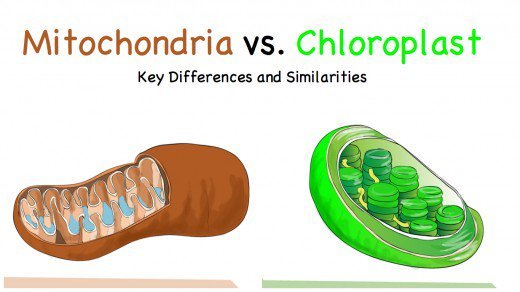
Compare And Contrast Chloroplasts And Mitochondria
Distinct compartments in the cell 4.
. The amino acid sequence of a polypeptide. The role of energy and the energetic constraints that prokaryotic cell organization placed on evolutionary innovation in cell history has recently. This HD dramatic video choreographed to powerful music introduces the viewerstudent to the wonder and miracle of cells.
Ribosomes - 80 S 3. Cells are unique to each type of organism. According to this idea a larger prokaryote or perhaps early eukaryote engulfed or surrounded a smaller prokaryote some 15 billion to 700 million.
Organelle membranes are important to several vital cell functions including protein synthesis lipid production and cellular respiration. Ribosomes - 70 S 4. The mitochondria and chloroplasts of eukaryotic cells also contain DNA which like the DNA of prokaryotes is short circular and not associated with protein.
Eukaryotic cells are more complex than prokaryotic ones because of specialized organelles. Centrioles - these cylindrical. The outer membrane is fairly.
A gene occupies a fixed position called a locus on a. These organelles contain the plant cells chlorophyll responsible for the plants green color and the ability to absorb energy from sunlight. Effectively writing different types of essays has become critical to academic success.
Very few of those models account for eukaryotic anaerobes. Chloroplasts make carbohydrates and mitochondria convert the carbohydrates into energyATP. Chloroplasts absorb the suns light energy for photosynthesis.
Mitochondria are also involved in other cell processes such as cell division and growth. The P680 requires an electron which is taken from a water molecule breaking the water into H ions and O-2. They are about the size of bacteria but may have different shapes depending on the cell type.
Learn how ancient collaborations between cells gave eukaryotes an important energy boost. Essay writing is a common school assignment a part of standardized tests and a requirement on college applications. Muscles take a lot of energy to contract the mitochondria supply energy.
If you look at very simple organisms you will discover cells that have no defined nucleus prokaryotes and other cells that have hundreds of nuclei multinucleated. Chloroplast DNA cpDNA is the DNA located in chloroplasts which are photosynthetic organelles located within the cells of some eukaryotic organismsChloroplasts like other types of plastid contain a genome separate from that in the cell nucleusThe existence of chloroplast DNA was identified biochemically in 1959 and confirmed by electron microscopy in 1962. A gene is a base sequence of DNA that codes for.
Learn vocabulary terms and more with flashcards games and other study tools. Not found in animal cells the cell wall helps to provide support and protection for the cell. The membranes of the different organelles vary in molecular composition and are well suited for the functions they perform.
This would probably not be a sufficient source of glucose. This finding could explain the reduced levels of glutamine found in several studies and suggested that the mitochondria in MECFS patients cells were also preferentially breaking down the glutamine amino acid for fuel. Mitochondria and chloroplasts are bound by a double membrane.
Only eukaryotes have chloroplasts with a surrounding membrane. I would expect a lot of mitochondria in muscle tissue. Often on tests choosing the correct type of essay to write in response to a writing prompt is key to getting the question right.
Chloroplasts mitochondria nucleus mesosomes present. Clearly students cant afford to remain. Endoplasmic and single membraned Golgi apparatus reticulum plastids nitochondria lysosomes vacuole endoplasm reticulum microbodies like lysosomes and are present Golgi body absent.
Start studying Biology Chapter 8. A functional RNA including ribosomal RNA and tRNAs. You have red blood cells that are used to carry oxygen O 2.
Light energy causes the removal of an electron from a molecule of P680 that is part of Photosystem II. The glucose that has not been broken down yet in the animal tissue. More than 20 different versions of endosymbiotic theory have been presented in the literature to explain the origin of eukaryotes and their mitochondria.
Cell Wall - this rigid outer wall is positioned next to the cell membrane in most plant cells. The authors believed that this metabolic dysregulation could have far-reaching consequences given its importance in many cellular processes. Mitochondria provide the energy a cell needs to move divide produce secretory products contract - in short they are the power centers of the cell.
This energy is used to convert water plus atmospheric carbon dioxide into metabolizable sugars by the biochemical process of photosynthesis. It is designed as a motivational tr. Chloroplasts are the key structure in the process of photosynthesis.
During the 1980s Lynn Margulis proposed the theory of endosymbiosis to explain the origin of mitochondria and chloroplasts from permanent resident prokaryotes. The energy transfer is similar to the chemiosmotic electron transport occurring in the mitochondria. Humans have hundreds of different cell types.
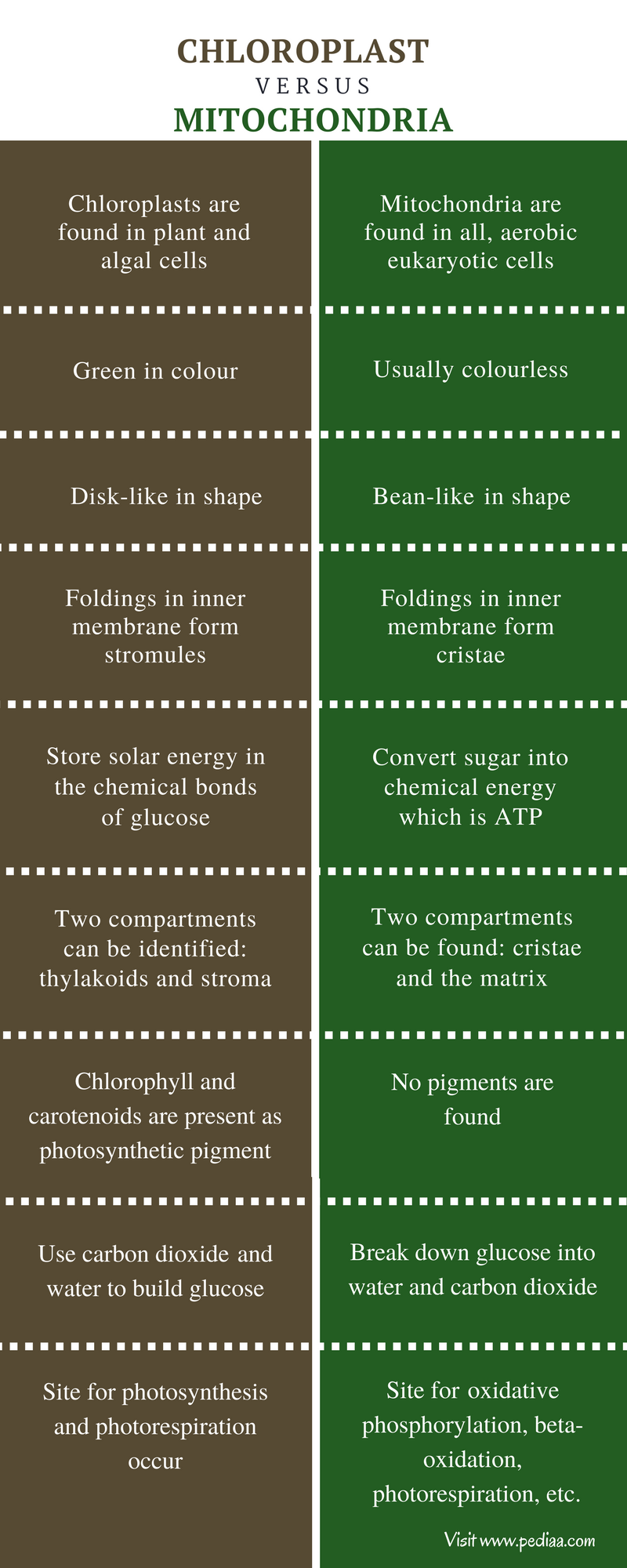
Difference Between Chloroplast And Mitochondria Structure Function Comparison

How Are Mitochondria And Chloroplasts Similar Mitochondria And Chloroplasts Similarities Lisbdnet Com

How Are Mitochondria And Chloroplasts Similar Mitochondria And Chloroplasts Similarities Lisbdnet Com
No comments for "Explain How Mitochondria and Chloroplasts Are Different"
Post a Comment